

Cathédrale Notre-Dame-de-l’Assomption is a landmark in central Montauban, set among the city’s brick buildings. Its white-stone façade and classical lines give it a distinct place in the historic centre, and the cathedral’s history reaches back to the late 17th century.
- Location: Place Franklin Roosevelt, central Montauban.
- From the hotel: about 2.5 km from Unisotel Montauban.
- History: construction began in 1692, and the cathedral was consecrated in 1739.
- Before planning an interior visit: check the Diocese of Montauban’s official site before you go.
Where is the cathedral in central Montauban?
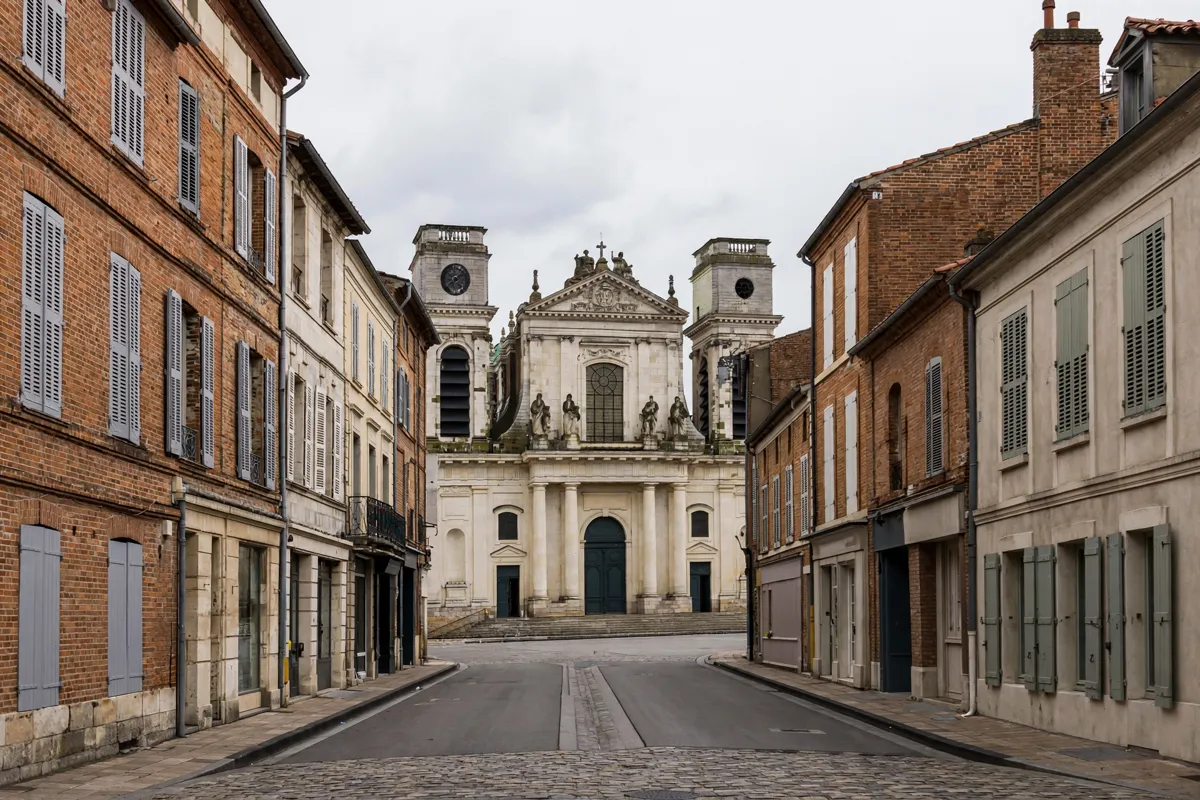
The cathedral is at Place Franklin Roosevelt in central Montauban; the Diocese of Montauban also gives its address as 20 Rue des Soubirous Bas, 82000 Montauban. That address makes it easy to locate while walking around the historic centre. For a wider route through the city, use it as one stop in a one-day walking itinerary in Montauban.
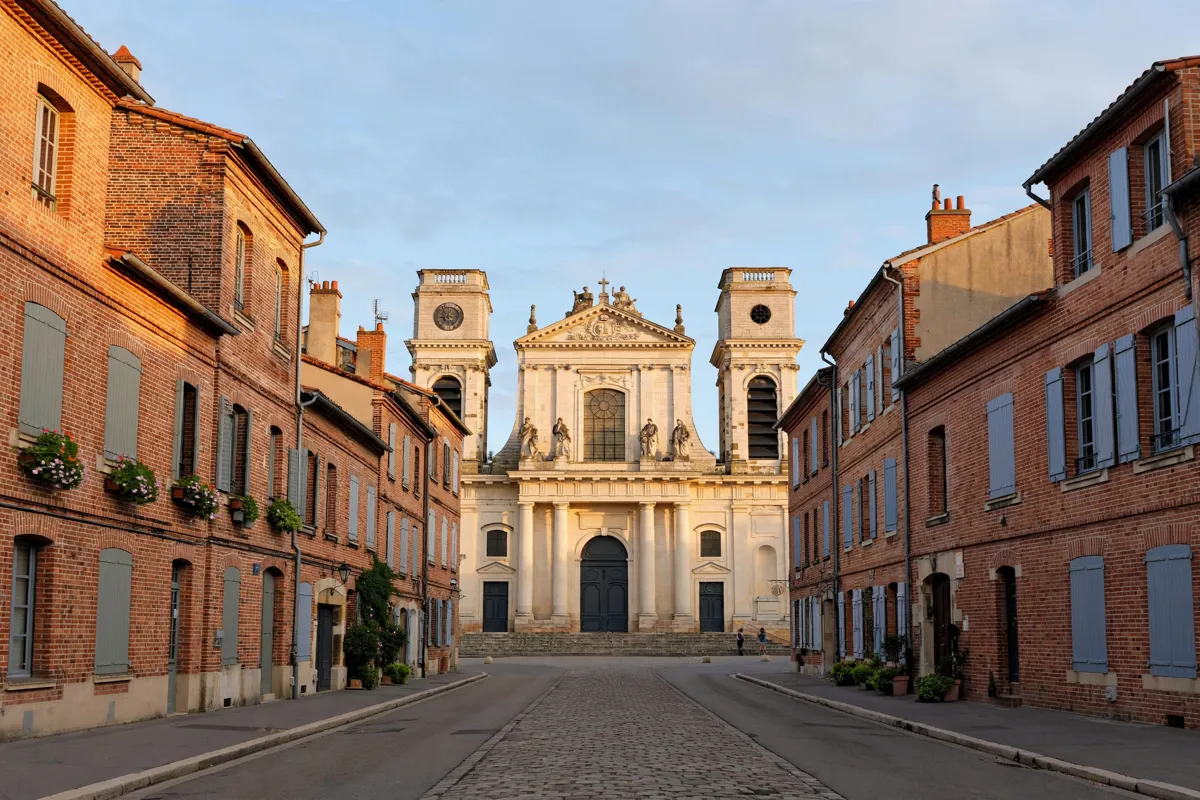
Montauban Tourism identifies the white-stone façade and classical lines as a contrast with the surrounding brick houses. The building was erected at the highest point of the city, a position that adds to its prominence among the central streets.
What should you notice in the cathedral’s architecture?
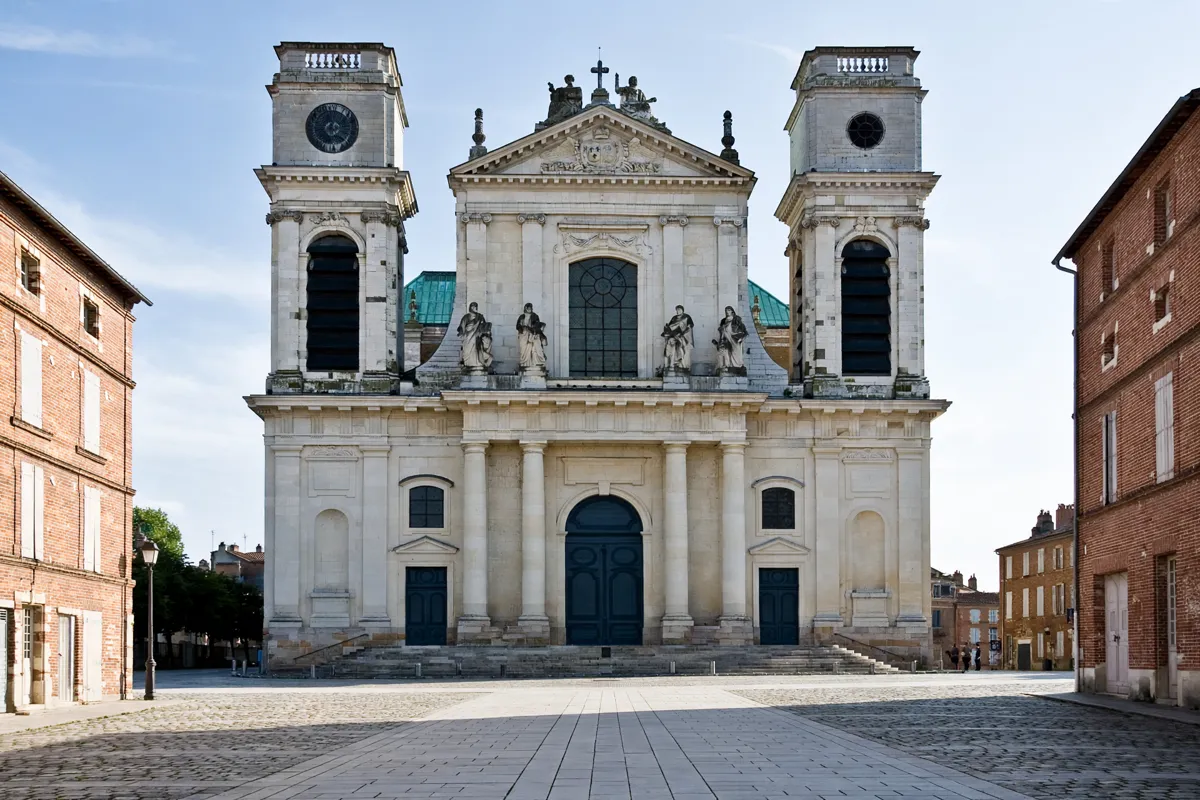
The cathedral’s classical design and pale stone façade set it apart from the brick architecture around it. Its construction began in 1692, and the building was solemnly consecrated in 1739. François d’Orbay, Jules Hardouin-Mansart and Robert de Cotte all worked on the design. The cathedral was classified as a Monument historique in 1906.
Look closely at the façade’s Evangelist statues. The four original statues are now inside the cathedral, while the figures visible outside are copies. The interior also houses Jean-Dominique Ingres’s painting Le Vœu de Louis XIII. The State commissioned the painting in 1820, and Ingres installed it in the cathedral in 1826.
Other furnishings recorded by Montauban Tourism include a walnut organ from the 17th century, a pulpit from the 18th century and a canopy from the 19th century. These details give the cathedral’s interior several distinct periods of craftsmanship, alongside Ingres’s painting.
How can you plan a respectful visit?
Check access before setting out, particularly if you hope to enter. The Diocese of Montauban provides contact details for the cathedral: 05 63 63 10 23 and cathedrale@catholique-montauban.cef.fr. Confirm current arrangements with the diocese before making plans around an interior visit.
If you attend a service, keep the cathedral’s role as a place of worship in mind and follow any directions given on site. For another historic church in the city, Église Saint-Jacques in Montauban is among the other churches in the Montauban Ville-Haute parish.
What can you add to a walk near the cathedral?
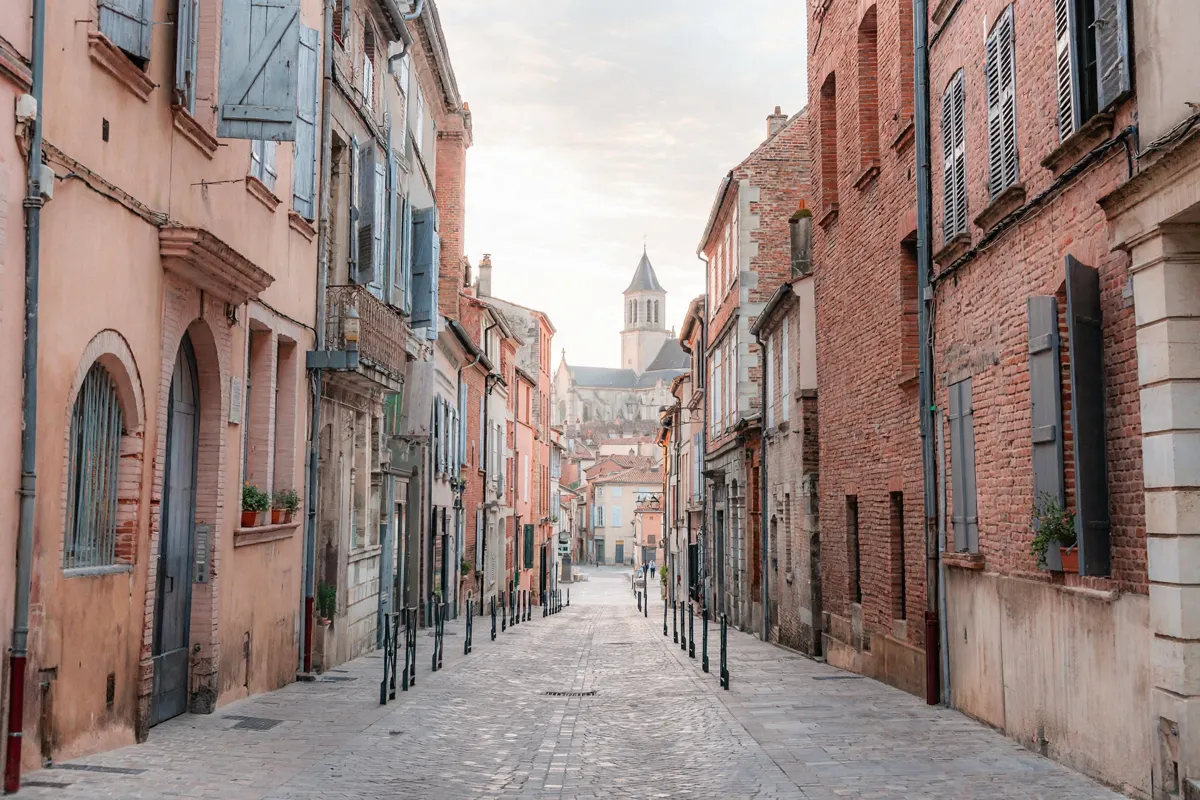
Build a walk around the central streets and the cathedral’s architectural contrast with the surrounding brick houses. The Musée Ingres offers another way to explore Montauban’s artistic heritage; its collections and visit planning make a natural next stop to research. The cathedral itself connects to Ingres through Le Vœu de Louis XIII, which he installed there in 1826.
For the wider area, Église Saint-Jacques is another church in the Ville-Haute parish. You can group it with the cathedral as part of a walk through central Montauban, then choose whether to include the museum based on your route.
FAQs
Where is Cathédrale Notre-Dame-de-l’Assomption?
It is at Place Franklin Roosevelt in central Montauban. The diocese also gives the address as 20 Rue des Soubirous Bas, 82000 Montauban.
When was the cathedral built?
Construction began in 1692, and the cathedral was solemnly consecrated in 1739.
What is notable about the cathedral façade?
Its white stone and classical lines contrast with Montauban’s surrounding brick houses. The exterior Evangelist statues are copies; the originals are inside.